What is cable conveyor
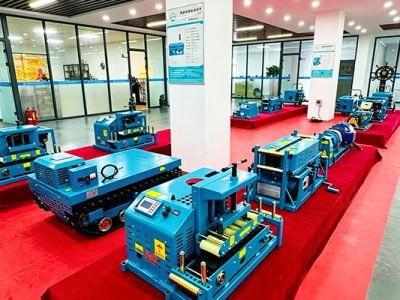
A cable conveyor is an electric machine used for laying power or communication cables. It is widely applied in cable laying construction scenarios such as urban power grid transformation, tunnels, and pipelines. It can effectively reduce labor intensity, significantly improve construction quality and efficiency, and has advantages including high pulling force, small size, light weight, and easy operation, thus its application is becoming increasingly widespread
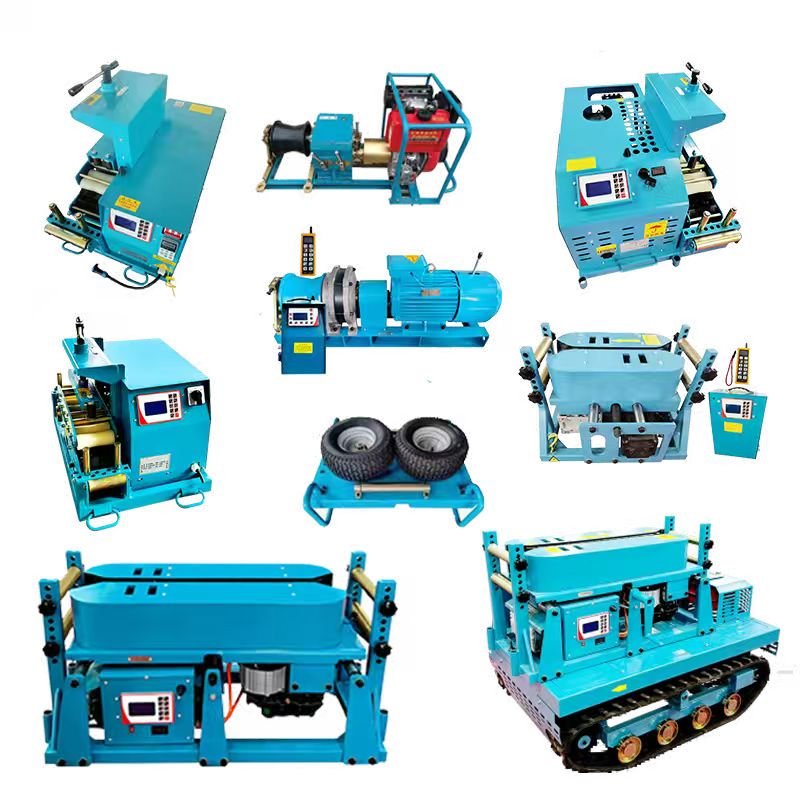
Cable conveyors mainly have three drive types: diesel, gasoline, and electric. Most of these devices adopt dual-axis drive technology and a rubber crawler clamping system, are equipped with supporting rollers, and feature an intelligent remote control function and a multi-unit linkage design. They can also work in linkage with supporting equipment such as cable winch and cable-releasing pulleys.
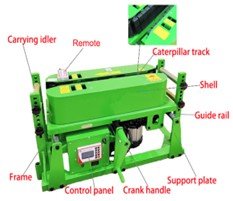
The 10 steps to operate the cable covneyor
- Place the machine on a stable workbench and fix the entire machine firmly.
- The equipment’s grounding wire must be effectively grounded.
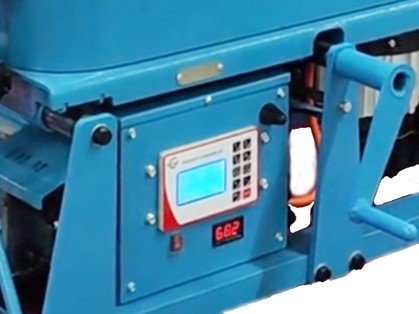
- Connect the power cord according to the marks on the power cord, turn on the power, and the voltmeter will display the supply voltage
- Turn on the panel switch button and the remote control power switch button; the display screen will stay on continuously.

5. Operate the buttons on the control panel or remote control, and the machine will work normally.
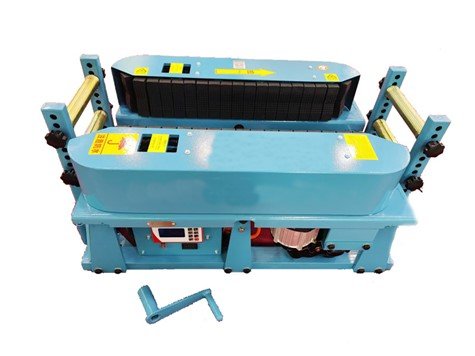
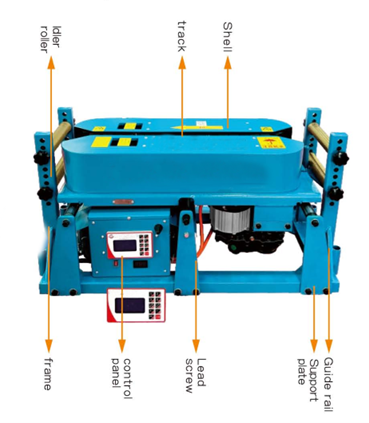
6. Cable paying-off/taking-out: Rotate the crank to open the crawler, place the cable to be conveyed inside, then rotate the crank in the reverse direction and press the crawler tightly. Operate the control panel or remote control to start the machine (if the cable slips, the crawler can be pressed a bit tighter appropriately). When cable paying-off is completed, stop the machine, rotate the crank to open the crawler, and take out the cable from above.
7.After use, turn off the panel switch button (the display screen will go out), then disconnect the power supply and turn off the remote control power switch button.
8.When the cable to be conveyed is too heavy or too long, the machine may be overloaded or the cable may slip. Using a single machine will be difficult to meet the construction requirements, so multiple cable conveyors need to be used in series. When used in series, all conveyors should be adjusted to run in the same direction, and cable pulleys should be added between each conveyor to prevent the cable from contacting the ground.

9. If the crawler is too loose or too tight, rotate the set screw at the crawler’s driven wheel to make adjustments.
10. In case of sudden shutdown during use, first disconnect the power supply, turn off the machine, check whether there is a fault in the machine and motor circuits, and restart the machine only after the fault is eliminated.

 English
  Arabic
  Portuguese
  German
  Spanish
  Russian
  Korean
  Japanese